
Halley’s Legacy: Eta Aquarid Meteor Shower Peak’s in 2025 –Where To Watch By State & Weather Forecast
Intro: A Trail of Stardust from Halley’s Comet
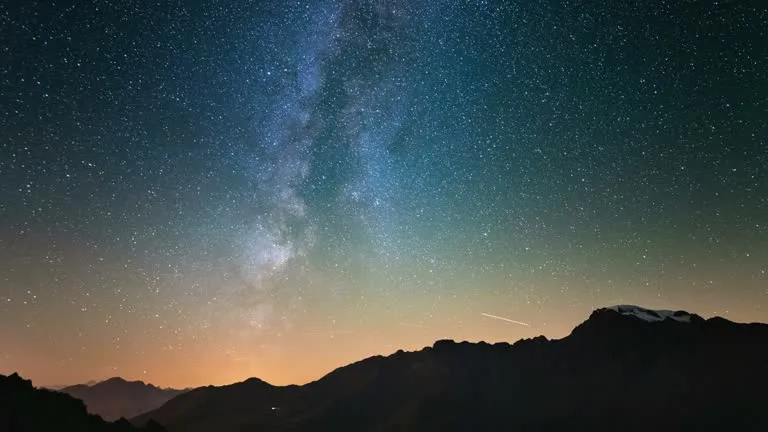
Each spring, the Earth intersects with the debris trail of one of the most iconic celestial bodies known to humankind — Halley’s Comet. As our planet moves through this ancient dust stream, it sets off a skyward spectacle known as the Eta Aquarid meteor shower. In 2025, the Eta Aquarids will reach their peak overnight from May 5 to May 6, promising an awe-inspiring display of up to 30 meteors per hour under optimal conditions.
Whether you’re a seasoned stargazer or just looking for a magical moment beneath the stars, this year’s Eta Aquarid shower offers a unique opportunity to witness remnants of a comet first recorded by astronomers over 2,000 years ago.
This year’s shower promises to be extra special — not only does it peak during a moonless window, but weather patterns across much of the United States are shaping up favorably. Whether you’re in Texas, California, or the Carolinas, there’s a good chance you can catch this show.
Here’s your complete, state-by-state guide to catching the Eta Aquarid meteor shower 2025, including weather forecasts, ideal viewing times, and dark sky tips.
1. 🌌 What Are the Eta Aquarids?
The Eta Aquarids are named after the constellation Aquarius, from which they appear to radiate. They occur each year in early May when Earth passes through the dusty trail left behind by the legendary Halley’s Comet.
While Halley’s Comet itself only appears every 75–76 years (last seen in 1986, next expected in 2061), it leaves behind debris that creates two major meteor showers each year: the Eta Aquarids in May and the Orionids in October.
Eta Aquarids are known for:
- Fast meteors (traveling at ~66 km/s)(147,600 mph)
- Persistent trains — glowing trails that can linger for several seconds
- Up to 30 meteors per hour under dark, clear skies
2. 📅 Eta Aquarid Shower Zenith and Timings 2025?
The shower is active from April 19 to May 28, but its peak occurs on the night of Monday, May 5 into the early morning of Tuesday, May 6 (2025).
🕒 Best Time to Watch
- Pre-dawn hours: 3:00 AM to 5:00 AM local time
- Look toward the eastern horizon, just before twilight.
- Minimal moonlight this year enhances visibility — the last quarter moon rises late, giving early morning hours a darker sky.
- Visibility: Best in the Southern Hemisphere, but still excellent across much of the United States, especially southern states.
🌑 Good News: The waning crescent Moon will not interfere with viewing this year — giving stargazers a dark canvas for optimal meteor spotting.
3. 📍 Where to Watch: Best US States for Viewing in 2025
Based on historical cloud cover data, light pollution maps, and preliminary weather forecasts (NOAA, AccuWeather trends):
✅ Best States for Viewing (Low Light Pollution + Favorable Skies)
| State | Ideal Locations | Expected Viewing Conditions |
|---|---|---|
| Texas | Big Bend NP, Hill Country | Mostly clear, dry skies |
| Nevada | Great Basin, Tonopah area | Dry desert air, great skies |
| Arizona | Sedona, Flagstaff, Sonoran Desert | Clear, dark sky havens |
| California | Death Valley, Joshua Tree | Patchy clouds inland, good desert views |
| Florida | Everglades, Ocala NF | Clear skies forecast |
🌥️ Mixed Conditions (Check Local Forecasts)
| Region | Considerations |
|---|---|
| Midwest | Cloud cover possible in parts of Illinois, Ohio, Indiana |
| Northeast US | Variable — Clearer in upstate NY, cloudier toward Boston |
| Pacific NW | Western WA & OR may face marine cloud layers |
☁️ Challenging Areas
- Coastal Washington and Oregon – Frequent cloud decks
- New England Coast – Fog and low clouds may impact visibility
💡 Tip: Use real-time weather radar apps (like Windy, Clear Outside) on May 5 to scout ideal conditions near you.
🌀 *Note: Conditions subject to change — check your local NOAA/NWS weather report or Clear Dark Sky or Weather.gov map before heading out. Avoid coastal fog in California and spring storms in the Midwest by prioritizing desert or mountain regions.
4. 🔭 How to Watch the Eta Aquarids Like a Pro
You don’t need a telescope — your eyes are the best tool for watching meteors.
Just follow these simple steps:
- Get away from city lights – Aim for a dark field, park, or rural area.
- Arrive early (around 2:30 AM) – Let your eyes adjust for 20–30 minutes.
- Lie flat – Face east or northeast, ideally with a wide open sky.
- Dress warmly – Early May nights can still be chilly.
- Be patient – Meteors may come in clusters, so watch for at least an hour.
📱 Helpful Apps:
- Sky Guide (iOS), Stellarium, Star Walk 2, or Heavens Above
5. 🌠 What Makes This Shower Special?
- Speed: These are among the fastest meteors we see each year.
- “Trains”: Many leave behind glowing dust trails — visible for seconds.
- Connection to Halley’s Comet: You’re literally watching comet dust light up from one of the most famous celestial bodies in history.
The same Halley’s Comet also produces the Orionids in October.
6. 🗺 Top 5 Dark Sky Locations in the US
For those seeking a truly cinematic experience:
- Cherry Springs State Park, PA – Top-rated for East Coast stargazing
- Big Bend National Park, TX – Remote, no light pollution
- Great Basin National Park, NV – Certified International Dark Sky Park
- Death Valley National Park, CA – Warm weather and vast skies
- Natural Bridges National Monument, UT – First designated Dark Sky Park in the world
7. 📸 How to Photograph the Meteor Shower
Basic Setup:
- Camera: DSLR or mirrorless
- Lens: Wide-angle, fast aperture (f/2.8 or better)
- Settings: 15–30 sec shutter, ISO 1600–3200, manual focus to infinity
- Tripod: Absolutely essential
- Intervalometer: For continuous shooting
🏁 Final Thoughts: Why You Shouldn’t Miss It
The Eta Aquarids are more than just a meteor shower — they’re a direct, glowing connection to Halley’s Comet, a celestial traveler that’s fascinated humanity for millennia.
In 2025, with favorable weather, dark skies, and a moonless peak, this might be your best chance in years to experience the shower at its finest. Whether you’re an amateur stargazer or just looking for a magical May moment, don’t sleep through it — literally.
Set your alarm. Pack some coffee. And look up.
🧠 Frequently Asked Questions
1. What causes the Eta Aquarid meteor shower?
The shower is caused by Earth passing through the debris trail of Halley’s Comet.
2. Can I see the Eta Aquarids from the Northern Hemisphere?
Yes! While southern latitudes get a slightly better show, the US will still see 10–30 meteors/hour in dark skies.
3. What’s the best time to look up?
The pre-dawn hours of May 6 (around 3–5 AM) offer the best chance.
4. Do I need any equipment?
Nope. Just your eyes, a reclining chair or blanket, and patience.
5. Will moonlight interfere?
Not this year! A waning crescent moon means darker skies and better meteor viewing.
6. Can I see the Eta Aquarids in cities?
→ You’ll see fewer meteors in light-polluted areas. Get as far from city lights as possible.
7.How many meteors per hour can I expect?
→ In ideal dark skies, 20–30 meteors/hour. In suburban areas, 5–10 may be visible.
8. Is this the same Halley’s Comet that returns every 76 years?
→ Yes! The debris you’re seeing is from Halley’s last visit in 1986.






Looking for some fresh games? Heard pakgamesdownload is the place to be. Gonna scope it out for some hidden gems. All games on pakgamesdownload
Okay, I tried out gamebetapp, and it’s pretty cool so far. Interface is clean and they are always updating the platform so there’s always something new. Check it here: gamebetapp
Alright, checked out go99globe and things are looking good! Wide range of games and easy to navigate. Might be my new go-to spot! Give go99globe a whirl and let me know what you think!
If you’re looking for a reliable link to VN88, linkvn88 is the place to go. Always up-to-date and easy to access. Make sure this is your starting point! Check it out here: linkvn88
Alright, trying to get logged into okjllogin and it’s smooth as butter. Hope the games are as good as the login process! Fingers crossed! okjllogin
Okay, phjlactivety, let’s see what you got! Hope there are some awesome games and not just the same old stuff. Wish me luck! phjlactivety
Okay so I saw phlagocasino, I was thinking what sort of cool new games they might have. Turns out some of them are good but nothing special phlagocasino
Galacticwinscasino… Dude, are you kidding me? That is THE COOLEST name ever! I’m gonna hit light speed and see what they’re offering! galacticwinscasino
Okay, 1winplinko is actually kind of addictive! Played for a bit last night and ended up having a surprisingly good run. Worth a look if you’re into that kind of game. Check out 1winplinko.
Gave casino222win a whirl. The graphics are slick and the gameplay’s smooth. Nothing crazy groundbreaking, but solid enough for a decent go! Give casino222win a try if you have some free time.