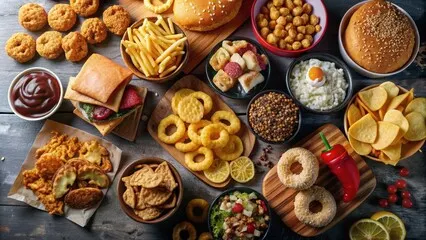

Not All That Glitters Is Gold: UPF’s Endangering Healthy Choices
Introduction: The Healthy Food Lie
Think you’re eating healthy? Think again.
That protein bar, your go-to wholegrain cereal, or that bottle of fruit juice may be doing more harm than good. New studies reveal that ultra-processed foods (UPFs) are not just about chips and soda—they’re lurking in so-called “health” foods we trust every day.
A 2025 global study revealed that ,ultra-processed foods (UPFs) constitute over 70% of the U.S. food supply, contributing to approximately 124,000 preventable deaths annually in the U.S. alone—many linked to products masquerading as healthy choices.
Recent studies have intensified concerns about ultra-processed foods (UPFs). A 2025 meta-analysis published in the American Journal of Preventive Medicine found that for every 10% increase in UPF consumption, the risk of premature death rises by approximately 2.7% . This underscores the urgent need to scrutinize not just overtly unhealthy foods but also those masquerading as healthy options.
This post uncovers the hidden UPFs in your kitchen, explains the dangers they pose, and gives you life-saving tips to reduce your exposure.
1. What Are Ultra-Processed Foods (UPFs)?
UPFs are foods that have undergone multiple stages of processing and often contain additives, preservatives, artificial sweeteners, colors, and emulsifiers.
They are typically high in sugar, fat, and salt, and low in fibre and nutrients. Unlike whole or minimally processed foods, UPFs are designed to be hyper-palatable, convenient, and cheap to produce.
The NOVA Classification System categorizes foods by processing level:
- Unprocessed/minimally processed: Fruits, vegetables, raw nuts.
- Processed: Canned beans, cheese, fermented bread.
- Ultra-processed: Industrial creations with additives like emulsifiers, artificial flavours, and hydrolysed proteins. Think protein bars, breakfast cereals, and flavoured yogurts .
Key difference: UPFs are engineered for hyper-palatability and shelf life, stripping nutrients while adding chemicals. They now comprise over 50% of calories in high-income nations.
2. The ‘Healthy’ Illusion: Sneaky UPFs You Probably Eat Every Day
Some UPFs wear a health halo, using buzzwords like “natural,” “low-fat,” or “protein-packed.” But look closer:
- Flavoured Yogurt: Often contains artificial sweeteners, stabilizers, and sugar levels rivalling desserts.Marketed as probiotic-rich, many contain more sugar than a candy bar. Additives like carrageenan (linked to gut inflammation) turn a health food into a UPF.
- Wholegrain Cereals: Marketed for heart health but packed with sugar and preservatives. Even “high-fibre” options often use refined grains, artificial dyes, and maltodextrin. A 2024 BMJ study tied ultra-processed cereals to a 12% higher diabetes risk.
- Granola/Protein Bars: Many are glorified candy bars with added whey isolates, sugar alcohols, and emulsifiers. Packed with isolated soy protein, invert syrup, and preservatives. A 2025 Lancet study found these bars drive 23% higher heart disease risk when consumed daily.
- Veggie Chips: Highly processed, low in actual vegetables, often deep-fried or puffed. Most are nutritionally equivalent to potato chips, with added starches and acrylamide (a carcinogen formed during frying).
- “100% Fruit” Juices: Stripped of fibre, these are liquid sugar bombs, packed with fructose, and often contain flavour enhancers. A 2025 NIH study linked sugary beverages to 17% higher stroke risk.
- Meal Replacement Shakes: Full of synthetic vitamins, gums, and additives. Loaded with artificial sweeteners and synthetic caffeine. Research shows they disrupt gut microbiomes, fuelling inflammation.
These foods are cleverly branded to seem healthy, yet they can be just as harmful as traditional junk food.
3. The Science: Why UPFs Are Worse Than You Think
Recent large-scale studies from Harvard, the BMJ, and JAMA have confirmed that high consumption of UPFs is strongly linked to:
- Cardiovascular disease
- Obesity
- Type 2 diabetes
- Depression
- Cancer
- All-cause mortality
A 2024 study found that more than 13% of premature deaths in the U.S. and U.K. were attributable to UPFs.
Beyond cardiovascular disease and obesity, recent research from NHLBI, NIH has linked UPFs to:
- Cognitive Decline: A study indicates that high UPF intake may increase the risk of dementia by 25% .
- Psoriasis: Higher consumption of UPFs is associated with an increased risk of developing psoriasis, a chronic inflammatory skin condition .
These foods disrupt the gut microbiome, increase inflammation, and alter metabolism in ways that traditional processed foods do not.
- Gut Health: UPFs erode gut lining diversity, triggering chronic inflammation and autoimmune disorders .
- Mortality: A 2024 umbrella review of 9.9 million people found convincing links between UPFs and a 50% higher risk of heart disease death and 48–53% higher anxiety risk.
- 2025 Insights: A global analysis in AJPM revealed each 10% increase in UPF intake raises all-cause mortality by 3%—equivalent to smoking 10 cigarettes daily .
These findings highlight the pervasive impact of UPFs on various aspects of health.
Mechanisms: Additives like emulsifiers (e.g., carboxymethylcellulose) may damage intestinal barriers, while hyperpalatable formulations hijack dopamine receptors, driving addiction-like overeating.
4. Why the War on UPFs Is Just Getting Started
Governments and health organizations are beginning to act. Some nations are considering UPF labelling laws, while others push educational campaigns. Lower-income groups are especially vulnerable due to affordability and accessibility of UPFs, making this not just a health crisis but a social justice issue.
- Regulatory Shifts: Brazil and France now tax UPFs, while the U.S. debates stricter SNAP restrictions on sugary snacks .
- Health Disparities: Low-income communities face double the UPF consumption rates due to food deserts and aggressive marketing .
- Corporate Tactics: Big Food rebrands UPFs as “clean” or “plant-based,” exploiting lax labeling laws. For example, “organic” snack bars often still contain malt syrup and ultra-processed isolates.
Major food manufacturers are fighting back with aggressive marketing and lobbying, but the tide is turning. Expect this issue to become a core public health priority by the end of the decade.
5. What You Can Do: Swaps & Strategies for a Cleaner Diet
The good news? You can start protecting your health today with simple changes:
- Swap flavored yogurt for plain Greek yogurt with fresh fruit
- Choose old-fashioned oats over instant flavored packets
- Make smoothies with whole fruits instead of drinking bottled juices
- Bake your own granola bars using nuts, oats, and honey
- Replace chips with air-popped popcorn or roasted chickpeas or roast kale or zucchini at home
- Cook from scratch more often—Batch-cook soups and grain bowls to avoid reliance on frozen UPF meals.
- Read ingredient labels: Avoid products with >5 ingredients or unrecognizable additives (e.g., soy lecithin, xanthan gum).
- Advocate: Support policies taxing UPFs and subsidizing fresh produce in food deserts
Start small. Even reducing your UPF intake by 20% can lead to measurable health improvements.
🚨 Conclusion: Take Back Control
Ultra-processed foods are more dangerous than many realize—especially the ones hiding under a “healthy” label. From premature death to chronic illness, the evidence is overwhelming. But you have the power to choose differently.
The UPF crisis isn’t just about junk food—it’s about an industry profiting from confusion. But knowledge is power:
- Audit your pantry: Toss anything with industrial additives.
- Cook more: Even simple swaps cut UPF intake by 40% .
- Spread awareness: Share this article—your choices can save lives.
Your next meal could add years to your life—or steal them. Choose wisely.
FAQ’s
Q1: What makes a food “ultra-processed”?
A food is ultra-processed if it contains mostly ingredients you wouldn’t use at home (like emulsifiers, stabilizers, artificial sweeteners, etc.) and has undergone heavy industrial processing.
Q2: Are all processed foods bad?
No. Minimally processed foods like frozen vegetables or canned beans are generally healthy. It’s the ultra-processed category that’s harmful.
Q3: What’s a simple way to identify UPFs?
Look for ingredient lists with more than 5 items, especially if you can’t pronounce half of them.
Q4: Are plant-based meat alternatives ultra-processed?
Many are. Check for ingredients like methylcellulose, soy protein isolate, and artificial flavours.
Q5: Is it realistic to eliminate all UPFs?
Probably not. But reducing them significantly—even by 30%—can improve your health outcomes.






PlayCityCasinoRTP is alright. It’s got a decent selection of games, and the RTP seems fair enough. I won a few bucks on one of the slots. Nothing crazy, but it was a fun time. Worth a look if you’re bored at playcitycasinortp.
Alright, 888Bet44… Pretty straightforward, reliable site. Nothing super flashy, but gets the job done. Easy to navigate, which is a plus. 888bet44
Hit up goo88hit last night and had a pretty good time. Nothing mind-blowing, but solid entertainment. If you’re bored and looking for something to do, give it a try: goo88hit
Yo, dagadonc1 is worth a look if you’re hunting around. Give it a try. Might just find something you like. Check it: dagadonc1.
Alright, alright, checked out kuwin789win and gotta say, it’s got some decent action going on. Nothing too crazy, but a solid option for a night in. Give kuwin789win a whirl and see what you think!
Yo, checked out onecasinonl. Interface is smooth and they seem to have a good variety of games. My buddy said he had a good payout experience also. Definitely worth a look if you’re searching for something new. Don’t be shy; try onecasinonl.
If your like me you love slots. v888slot seems to offer tons of slots to choose from. If you are into slots as well, this site will keep you busy for a long time. Check out v888slot and find your favorite new slot.
Alright, listen up! If you’re looking for the high-roller experience, Go88x VIP is the way to go. It’s next-level stuff go88x vip. Get involved!
Looking to download the Casino Plus app? It’s super easy and worth it, trust me! Click here casino plus app download and get started playing!
Heard some good things about the Plot777 app. Thinking of downloading it and giving it a whirl. Hope the payouts are decent hehe. Check out the plot777 app!
W88is… W88 is always reliable, right? Just double-checking before I jump in! w88is
For quick and reliable livescores on Macau football, 7mcn ma cao is excellent. Its user interface is easy to use, perfect for casual and serious fans. Try it, you won’t be disappointed: 7mcn ma cao
Okay, ku1.net ain’t bad. It’s pretty straightforward and does what it says on the tin. If you need a reliable place, give it a shot! See for yourself: ku1.net