
NOAA Could Revolutionize Marine Crime Investigations:$20,000 Reward for a Beheaded Dolphin
A Grim Discovery on Lea-Hutaff Island
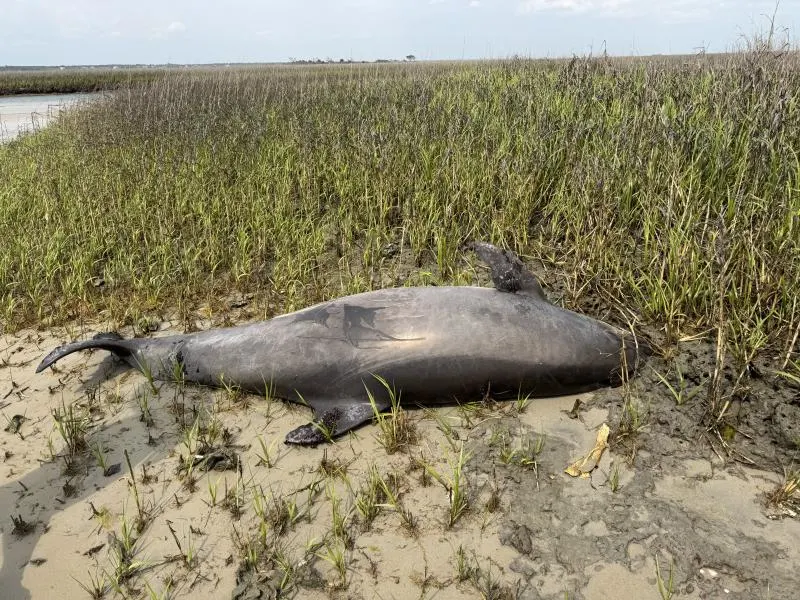
On a remote stretch of North Carolina’s Lea-Hutaff Island, a quiet sanctuary for nesting sea turtles and migratory birds, a Beheaded bottlenose dolphin was discovered by marine scientists conducting routine monitoring. Initially found intact in March, the dolphin was later brutally mutilated, its head severed—clear evidence of intentional human interference.
What followed stunned the wildlife community: the National Oceanic and Atmospheric Administration (NOAA) announced a $20,000 reward—one of the largest ever offered for a marine wildlife crime. It sent a clear signal: this wasn’t just another illegal act—it was a declaration of war on protected marine species.
“This is not just disturbing—it’s criminal,” said NOAA spokesperson Ben Laws. “We’re treating this case with the highest level of urgency.”
A Federal Crime with Deep Implications
Timeline & Discovery
- April 15, 2024: A deceased bottlenose dolphin was reported stranded on Lea-Hutaff Island, a remote barrier island north of Wilmington, NC, accessible only by boat.
- Post-Stranding Mutilation: Officials from the University of North Carolina Wilmington (UNCW), which partners with NOAA to respond to marine mammal strandings, determined the dolphin’s head was intentionally removed after its death.
- Necropsy Pending: A necropsy (animal autopsy) was conducted, but results and the exact cause of death remain under investigation.
Health Risks
- Brucella Bacteria: The dolphin tested positive for Brucella, a pathogen that causes brucellosis in humans. The CDC warns that direct contact with infected tissue can lead to symptoms like fever, headaches, and malaise.
Legal Implications
Reward Specifics: NOAA’s $20,000 reward is for information that directly leads to a conviction. Tips can be submitted anonymously, but claimants must provide contact details to qualify.
Marine Mammal Protection Act (MMPA): Dolphins are federally protected under the MMPA, which prohibits harassing, harming, or killing wild dolphins. Violators face fines up to $100,000 and one year in jail.
Why $20,000? An Unprecedented Leap
Most NOAA rewards for wildlife crimes hover between $1,000 and $5,000. So why the dramatic jump?
According to experts, the public outrage and grotesque nature of the mutilation compelled federal authorities to escalate the stakes. A spokesperson from NOAA confirmed that “the scale of the reward reflects both the brutality of the act and the urgent need for leads.”
This case may also signal a shift in NOAA’s enforcement strategy—moving from reactive investigations to proactive deterrence, by crowdsourcing justice and drawing public attention.
You May Like:
How This Could Change Marine Crime Investigations Forever
1. The Rise of Marine Forensics
The science of solving wildlife crimes has advanced rapidly. In recent years, NOAA and marine scientists have deployed:
- DNA forensics to match injured animals to specific fishing equipment.
- Drone surveillance to monitor illegal vessel activity.
- Satellite tagging to track marine mammal movement and possible foul play.
In the North Carolina dolphin case, NOAA has confirmed they are analyzing tissue samples to determine the time and tool of decapitation.
2. Public Tips That Led to Real Arrests
This isn’t the first time a public tip could change the course of an investigation. Here are a few historical cases where community reporting cracked marine crimes:
- Florida (2012): A dolphin shot near Naples prompted a tip from a fisherman who recalled seeing a rifle onboard a nearby boat.
- Mississippi (2020): An anonymous caller reported dock chatter about “gutting a dolphin,” leading to a suspect involved in illegal fishing.
- San Diego (2016): Videos of sea lion shootings taken by locals led to convictions under the MMPA.
- South Carolina (2018): A tourist reported a Facebook post selling protected seashells—triggering a wildlife trafficking bust.
These cases highlight the power of citizen science and community vigilance, especially when rewards incentivize action.
3. Could the Dolphin Case Set a Legal Precedent?
Environmental attorneys argue that the case could influence new legislation around mandatory vessel monitoring, harsher MMPA penalties, and even AI-powered tracking tools for identifying illegal marine activity.
The Ripple Effect on Marine Conservation
This isn’t just about one dolphin. Globally, there has been a surge in marine wildlife crimes—from shark finning to whale strandings under suspicious circumstances.
Experts warn that such gruesome acts can also undermine eco-tourism. North Carolina’s coastal economy thrives on dolphin-watching tours, sea kayaking, and nature excursions. Crimes like this could deter visitors and raise ethical and environmental red flags.
“These animals are ambassadors of the ocean. Killing one sends a message to the public that the law is optional out there.”
– Dr. Amanda Summers, Marine Biologist, UNC Wilmington
Why This Matters to You
You may be wondering—why should I care about one dolphin on a remote island?
- Food Safety: If linked to illegal fishing or toxic dumping, this case could expose wider issues in the seafood supply chain.
- Environmental Ethics: Marine mammals are sentient beings, protected for a reason. Turning a blind eye enables more abuse.
- Your Tax Dollars: NOAA is publicly funded. This reward is being paid with your money, in hopes that you might help solve the crime.
What You Can Do
🎯 Report Suspicious Activity:
If you have information, call NOAA’s Enforcement Hotline: 1-800-853-1964, or visit NOAA’s Report Page.
📢 Spread the Word:
Share this article. Use your platform to raise awareness about marine wildlife crimes.
🌊 Support Marine Conservation:
Consider donating to marine protection groups like Ocean Conservancy or Sea Shepherd, which work to defend vulnerable marine life around the globe.






Diwatacasino isn’t too bad. There’s a fair selection and a friendly platform. A nice little game to try at diwatacasino
Signed up at 3355bet last week. Good variety of stuff to bet on, from sports to slots. Their customer service was quick to respond when I had a question too, which is always a plus.
Trying my luck with 5hbetentrar! Registration was smooth. Let’s see if the wins are just as easy! Have a look: 5hbetentrar
Needed a new app and stumbled onto 9sappdownload. Easy to find what I wanted and the download was fast. Score! Get it at 9sappdownload.